

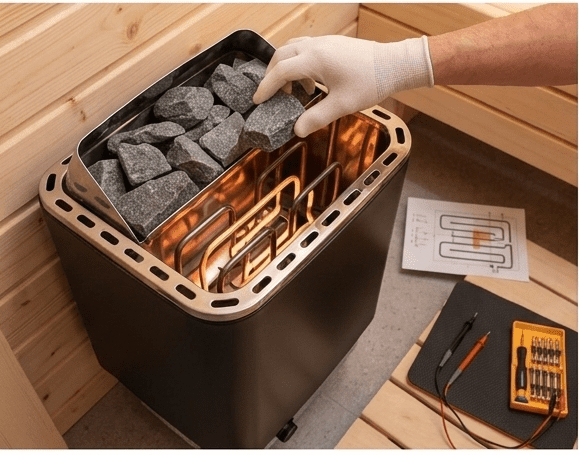
Sauna Installation UAE:
Hotels, Gyms & Commercial Spas — The Complete Specification Guide
Commercial sauna installation UAE is one of the fastest-growing segments within the region’s luxury hospitality and fitness infrastructure market. As Dubai consolidates its position as a global wellness destination, and as Abu Dhabi and Ras Al Khaimah continue to attract resort and eco-luxury developments, the demand for high-specification sauna facilities in hotels, gyms, and commercial spas has never been more pronounced.
This guide is written for the decision-makers who manage the procurement: hotel spa directors, gym operators, wellness consultants, and project managers overseeing commercial sauna installation in Dubai and across all seven Emirates. It covers everything from site assessment and technical specification through to supplier selection, compliance, and ongoing maintenance — the complete picture before a single panel is ordered.
1. Why Commercial Sauna Installation in the UAE Is Different
The UAE’s climate is the defining challenge for any sauna installation project. Ambient outdoor temperatures regularly exceed 45°C in summer, placing extraordinary demands on mechanical systems, insulation strategy, and building envelopes in ways that are simply not a factor in European or North American projects.
Sauna contractors operating in temperate climates design for heat retention from the inside. In the UAE, the design brief also requires managing heat ingress from the outside, preventing the ambient building temperature from undermining the precise thermal differential required for the sauna experience to function as intended — and to do so efficiently, without spiralling energy costs that make the facility commercially unviable.
The UAE’s Three Core Sauna Markets
Commercial sauna installation in the UAE divides cleanly into three distinct market segments, each with its own specification priorities:
- Hotel & Resort Spas — the largest segment by project value, typically requiring multi-room sauna suites, premium Finnish or bio sauna installations, halotherapy rooms, and full integration with existing HVAC and wet area infrastructure. Key markets: Downtown Dubai, Palm Jumeirah, DIFC, Saadiyat Island Abu Dhabi, Al Hamra RAK.
- Commercial Gyms & Health Clubs — a high-volume, cost-sensitive segment where gym sauna installation UAE projects are driven by member retention, premium tier differentiation, and operational simplicity. Common across JLT, Business Bay, Dubai Marina, Al Reem Island Abu Dhabi.
- Day Spas & Wellness Centres — the most specification-variable segment, ranging from boutique thermal journey installations to single Finnish sauna installations within broader treatment menus. Growing strongly in Dubai Healthcare City, Abu Dhabi’s wellness corridor, and Jumeirah.
2. Sauna Types: Technical Specifications for Commercial UAE Installations
Before any commercial sauna installation in Dubai or elsewhere in the UAE can be specified, operators need to understand the technical distinctions between the main sauna typologies. Each carries different infrastructure requirements, energy loads, ventilation demands, and user experience profiles.
2.1 Finnish Dry Sauna
The benchmark of sauna installation. Operating temperature range: 80°C–100°C. Humidity: 10–20%. Heat source: electric kiuas (sauna heater) or wood-burning in appropriate settings. For commercial hotel and gym sauna installation UAE projects, electric kiuas are standard, with 3-phase power supply commonly required for rooms accommodating eight or more users simultaneously.
Sauna rocks (stein) absorb and radiate heat, and the ability to pour water over them to create brief steam bursts is the defining ritual. Room construction requires purpose-built thermal insulation boards, Nordic spruce or aspen lining (heat-tolerant, splinter-resistant, low-resin), and a fully sealed vapor barrier — a non-negotiable in the UAE’s humidity-variable climate.
2.2 Bio Sauna (Soft Sauna)
Operating temperature: 55°C–65°C. Humidity: 40–60%. The bio sauna is increasingly the specification of choice for hotel sauna installation UAE projects targeting broader wellness guest demographics — it delivers therapeutic heat benefits at a lower temperature threshold that is more accessible to guests not accustomed to traditional Finnish sauna intensity.
From an infrastructure perspective, bio saunas require precise humidity injection systems, more sophisticated control logic, and higher-quality ventilation design to maintain stable humidity without condensation risk.
2.3 Steam Room (Hammam / Turkish-Style)
Operating temperature: 40°C–50°C. Humidity: 95–100%. Though technically distinct from dry sauna, steam rooms are almost universally specified alongside sauna as part of a commercial thermal suite in hotel and spa sauna installation UAE projects. The UAE market has strong cultural alignment with the hammam tradition, giving steam rooms an important role in guest experience design.
Steam rooms place the highest demands on waterproofing, drainage, and surface material specification. Tile and stone selections must be rated for continuous wet heat exposure; silicone grout is required throughout; and drainage design must account for the volume of condensation generated continuously during operation.
2.4 Infrared Sauna
Operating temperature: 45°C–60°C. Heat source: ceramic, carbon, or full-spectrum infrared emitters. Infrared saunas are gaining traction in gym sauna installation UAE contexts, particularly premium boutique studios and wellness-focused gyms, owing to their lower operating temperatures, faster heat-up time (15–20 minutes vs 30–45 for Finnish), and significantly lower energy consumption.
They carry a distinct infrastructure advantage in retrofit scenarios: no requirement for the heavy thermal insulation and vapors barrier infrastructure of Finnish sauna means installation can proceed in spaces that would otherwise be structurally unsuitable.
3. Commercial Sauna Specification: The UAE Standards Matrix
The following specification matrix covers the key technical parameters for commercial sauna installation in the UAE. These parameters should be treated as minimum standards for commercial-grade installation; premium hotel and resort projects will typically exceed these benchmarks significantly.
Parameter | Finnish Sauna | Bio Sauna | Steam Room | Infrared Sauna |
Operating Temp (°C) | 80 – 100°C | 55 – 65°C | 40 – 50°C | 45 – 60°C |
Humidity (%) | 10 – 20% | 40 – 60% | 95 – 100% | < 10% |
Heat-Up Time | 30 – 45 min | 25 – 35 min | 20 – 30 min | 15 – 20 min |
Min. Room Height | 2.1 m | 2.1 m | 2.2 m | 1.9 m |
Power Req. (8-person) | 18 – 24 kW (3-phase) | 12 – 18 kW (3-phase) | 9 – 15 kW (3-phase) | 4 – 8 kW (single) |
Ventilation Rate | 4–8 ACH | 6–10 ACH | 10–15 ACH | 4–6 ACH |
Lining Material | Nordic spruce / aspen | Alder / spruce | Porcelain tile / stone | Cedar / hemlock |
Vapour Barrier Required | Yes | Yes | Full waterproofing | Not required |
Drainage Required | Floor drain recommended | Floor drain required | Full drain system | No |
Typical Lifespan | 20+ years | 15–20 years | 20+ years | 10–15 years |
4. Site Assessment & Pre-Installation Requirements
Every commercial sauna installation UAE project begins with a rigorous site assessment. Skipping or compressing this phase is the single most common source of project overruns and post-installation performance failures in the region. The UAE’s building stock varies enormously — from glass-curtain-wall towers with limited structural modification options to heritage low-rise properties in older emirate districts — and the site assessment must account for all of it.
4.1 Structural Assessment
Sauna installations introduce concentrated floor loads from the heater unit, tiered bench structures, and — in the case of steam rooms — the substantial weight of full ceramic or stone wall and floor finishes. A structural engineer’s sign-off on slab load capacity is required before specification can be finalised for any new commercial installation.
4.2 Electrical Infrastructure
Commercial sauna installation in Dubai and across the UAE requires compliance with DEWA (Dubai Electricity and Water Authority) or the relevant authority (ADDC in Abu Dhabi, SEWA in Sharjah/Northern Emirates) for all electrical connections. Three-phase power is required for any sauna room designed for commercial multi-user occupancy.
Key electrical pre-checks include: available three-phase capacity at the distribution board; cable routing from DB to plant room and sauna location; isolation switch placement per authority requirements; and GFCI/RCD protection for all circuits serving wet or humid environments.
4.3 Ventilation & HVAC Integration
The UAE’s central air conditioning infrastructure presents a specific challenge for sauna installation. The constant cooling load from building-wide HVAC working against the sauna’s heat generation creates a significant energy efficiency problem if not managed at the design stage. A mechanical engineer experienced in UAE commercial wellness installation must be engaged to model the thermal interaction and specify the required insulation uplift and HVAC zoning to prevent cross-interference.
Ventilation within the sauna room itself must be designed independently of the building’s HVAC: saunas require supply air at low level and exhaust at high level, with rate determined by room volume and occupancy type. This is a specialist sauna ventilation calculation, not a standard HVAC sizing exercise.
4.4 Waterproofing & Drainage
For steam rooms and wet-area sauna suites, tanking of all surfaces to a minimum of 300 mm above the highest anticipated water line is mandatory. In the UAE context, where concrete structures can be susceptible to salt penetration, the tanking specification must also address substrate preparation for the local building environment.
5. UAE Regulatory Compliance for Commercial Sauna Installation
Commercial sauna installation in the UAE operates within a layered compliance framework that spans federal safety legislation, emirate-level authority regulations, and municipality-specific requirements for the fit-out category. Non-compliance is not merely a regulatory risk — it directly affects insurance validity, operator licensing, and in the case of hotel sauna installation UAE projects, the star-rating assessment criteria administered by the relevant tourism authority.
5.1 Dubai Regulatory Framework
In Dubai, commercial wellness fit-outs including sauna installation must comply with Dubai Civil Defence (DCD) requirements for fire safety, including suppression systems appropriate to the wet heat environment. Building permits for sauna installation fall under Dubai Municipality’s fit-out permitting process, and any structural modifications require a NOC from the building owner and structural NOC from the municipality.
Hotel sauna installation UAE projects on licensed hospitality properties additionally require compliance with the Department of Economy and Tourism (DET) wellness facility guidelines, which specify minimum room dimensions, ventilation standards, and operational hygiene requirements for commercially operated thermal facilities.
5.2 Abu Dhabi Regulatory Framework
In Abu Dhabi, the Department of Municipalities and Transport oversees building permit requirements, while the Department of Health sets operational standards for spa and wellness facilities. Commercial sauna installation in Abu Dhabi hotels and spas must also comply with the Abu Dhabi Quality and Conformity Council (QCC) standards for wellness facilities, which have been significantly updated in recent years to bring them into alignment with international best practice.
5.3 Northern Emirates (RAK, Fujairah, Sharjah)
Ras Al Khaimah, with its growing resort and eco-luxury hotel market, has seen a significant increase in hotel sauna installation UAE activity. RAK Municipality governs building permits and fit-out approvals, while the Ras Al Khaimah Tourism Development Authority (RAKTDA) sets wellness facility standards for licensed hospitality operators. Permit timelines in RAK are generally shorter than Dubai, though this should not be treated as an invitation to compress the pre-application preparation phase.
6. Costs: Benchmarking Commercial Sauna Installation in the UAE
Cost benchmarking for commercial sauna installation UAE is more variable than any other element of this guide, because project cost is driven by a matrix of factors — room count, size, finish specification, access constraints, and prevailing material costs — that combine differently in every project. The figures below represent current market benchmarks for fit-out-only costs (excluding MEP upgrades and structural works), based on standard commercial projects completed in the UAE market.
Facility Type | Size Range | Fit-Out Cost (AED) | Typical Timeline |
Gym Sauna (Finnish, 4-person) | 4 – 6 m² | 35,000 – 65,000 | 3 – 5 weeks |
Gym Sauna (Finnish, 8-person) | 8 – 12 m² | 65,000 – 110,000 | 4 – 6 weeks |
Infrared Sauna (2–4 person) | 3 – 5 m² | 28,000 – 55,000 | 2 – 4 weeks |
Hotel Bio Sauna Suite (8-person) | 10 – 16 m² | 110,000 – 220,000 | 6 – 10 weeks |
Hotel Finnish + Steam Combo | 18 – 28 m² | 180,000 – 380,000 | 8 – 14 weeks |
Full Thermal Suite (5+ rooms) | 60 – 120 m² | 600,000 – 1,400,000+ | 14 – 24 weeks |
Premium Hammam + Sauna Suite | 40 – 80 m² | 350,000 – 800,000 | 12 – 20 weeks |
7. Selecting a Commercial Sauna Installation Contractor in the UAE
Supplier selection is where commercial sauna installation UAE projects are won or lost. The UAE market includes a range of suppliers from highly qualified specialist contractors with demonstrable hotel and resort portfolios through to general fit-out companies that have added sauna installation to their service list without the underlying technical competency.
Mandatory Qualification Criteria
Any contractor being evaluated for commercial sauna installation in Dubai, Abu Dhabi, or elsewhere in the UAE should be assessed against the following mandatory criteria before invitation to tender:
- Demonstrated portfolio of completed commercial sauna installations in the UAE, with verifiable references from hotel, gym, or spa operators — not residential projects
- Technical certification from a recognised European sauna manufacturer (Harvia, Tylö Helo, Klafs, Thermory, or equivalent) confirming approved installer status
- Evidence of MEP coordination capability: the contractor should employ or formally partner with a licensed UAE MEP contractor, not simply pass MEP works to an unspecified subcontractor
- Demonstrated understanding of UAE authority permit processes: the contractor should be able to produce examples of successfully permitted commercial sauna installations under Dubai Municipality, DCD, or relevant emirate authority requirements
- Warranty provision: minimum five years on structural installation, two years on electrical and control systems, with UAE-based service response commitment
- Insurance: valid UAE public liability and professional indemnity insurance certificates
Red Flags to Reject at Pre-Qualification
- Portfolio consisting entirely of residential or private villa projects
- No named MEP partner or in-house MEP capability
- Inability to produce specific permit documentation from UAE authority submissions
- Pricing structured on materials only with ‘installation extra’ — a common vehicle for scope creep in the UAE fit-out market
- No UAE-based service team for post-installation maintenance
8. Maintenance & Operational Considerations
The operational phase of any commercial sauna installation UAE project determines whether the capital investment delivers the intended return. Sauna facilities that are not maintained to commercial standards deteriorate rapidly in the UAE’s climate — and the associated risks, from guest safety incidents to licensing non-compliance, are commercially material for hotel and gym operators.
Preventive Maintenance Schedule
Frequency | Maintenance Task | Responsible Party |
Daily | Surface cleaning, drain inspection, bench and lining check | Facility staff |
Weekly | Control system check, heater element inspection, ventilation filter check | Facility staff / technician |
Monthly | Full kiuas inspection, rock condition assessment, vapour barrier integrity check | Qualified technician |
Quarterly | Full electrical inspection, ventilation duct cleaning, water treatment system service | Licensed contractor |
Annual | Comprehensive structural review, lining treatment/replacement assessment, full compliance audit | Specialist contractor |
For hotel sauna installation UAE projects, a formal operational manual covering user safety protocols, emergency procedures, and maintenance schedules is a requirement under the relevant tourism authority operating licence, and should be requested from the installation contractor as a project deliverable.
9. Sustainability & Energy Efficiency in UAE Commercial Sauna Installation
Energy efficiency is an increasingly significant consideration in commercial sauna installation in Dubai and across the UAE, driven both by the operational cost of running sauna facilities in a hot climate and by the growing prominence of sustainability frameworks in UAE hospitality — most notably the Dubai Sustainability Strategy and the Estidama Pearl Rating System in Abu Dhabi.
- Insulation specification: thermal performance of sauna room insulation must significantly exceed the minimum required for temperate-climate installations, to account for the UAE’s ambient heat load and the higher differential between sauna interior and building envelope temperature
- Heater efficiency: commercial-grade kiuas units with digital control and demand-based heating (pre-heat scheduling, occupancy sensors) can reduce energy consumption by 25–35% compared to manually controlled units on a typical gym sauna installation UAE operation
- Heat recovery ventilation: heat recovery units on sauna exhaust ventilation recover thermal energy from exhaust air and return it to the supply stream, materially improving the overall thermal efficiency of the installation
- Controls integration: integration of sauna controls with building management systems (BMS) allows sauna pre-heat to be scheduled against booking data, eliminating the common wastage pattern of saunas running on standby for extended periods between bookings
- Water-source heat options: for large resort and hotel sauna installation UAE projects, heat pump integration for steam generation can significantly reduce the energy cost of steam room operation compared to direct electric steam generators
How long does a commercial sauna installation take in the UAE, from site assessment to handover?
Timeline is one of the most frequently asked questions from hotel and gym operators planning a sauna installation UAE project, and the honest answer is: it depends heavily on how well-prepared the site assessment phase is.
What are the power requirements for commercial sauna installation in Dubai and the UAE?
Electrical infrastructure is consistently the most underestimated cost element in commercial sauna installation UAE projects, particularly in older buildings and retrofitted gym or hotel spaces where the existing distribution boards were not designed to support the additional load.
How do I maintain a commercial sauna in the UAE climate — and what does it cost annually?
Operational maintenance is the most underbudgeted element of commercial sauna installation UAE projects. Operators who approach sauna maintenance as an afterthought consistently report higher out-of-service rates, reduced equipment lifespan, and — in the worst cases — guest safety incidents that result in facility closures.
Conclusion: The Commercial Sauna Installation UAE Decision
Commercial sauna installation in the UAE is a technically demanding, multi-discipline project that rewards thorough preparation and penalises shortcuts. The operators who commission the best facilities — the hotel sauna installations in Dubai’s five-star properties, the premium gym sauna installations across Abu Dhabi’s fitness landscape, the award-winning spa sauna installations in RAK’s resort sector — consistently share a common approach: they invest in specification before they invest in installation.
Get the site assessment right. Understand the regulatory environment. Specify to commercial standards, not residential benchmarks. Select a contractor with a verified UAE commercial portfolio. And build in the maintenance framework from day one.