

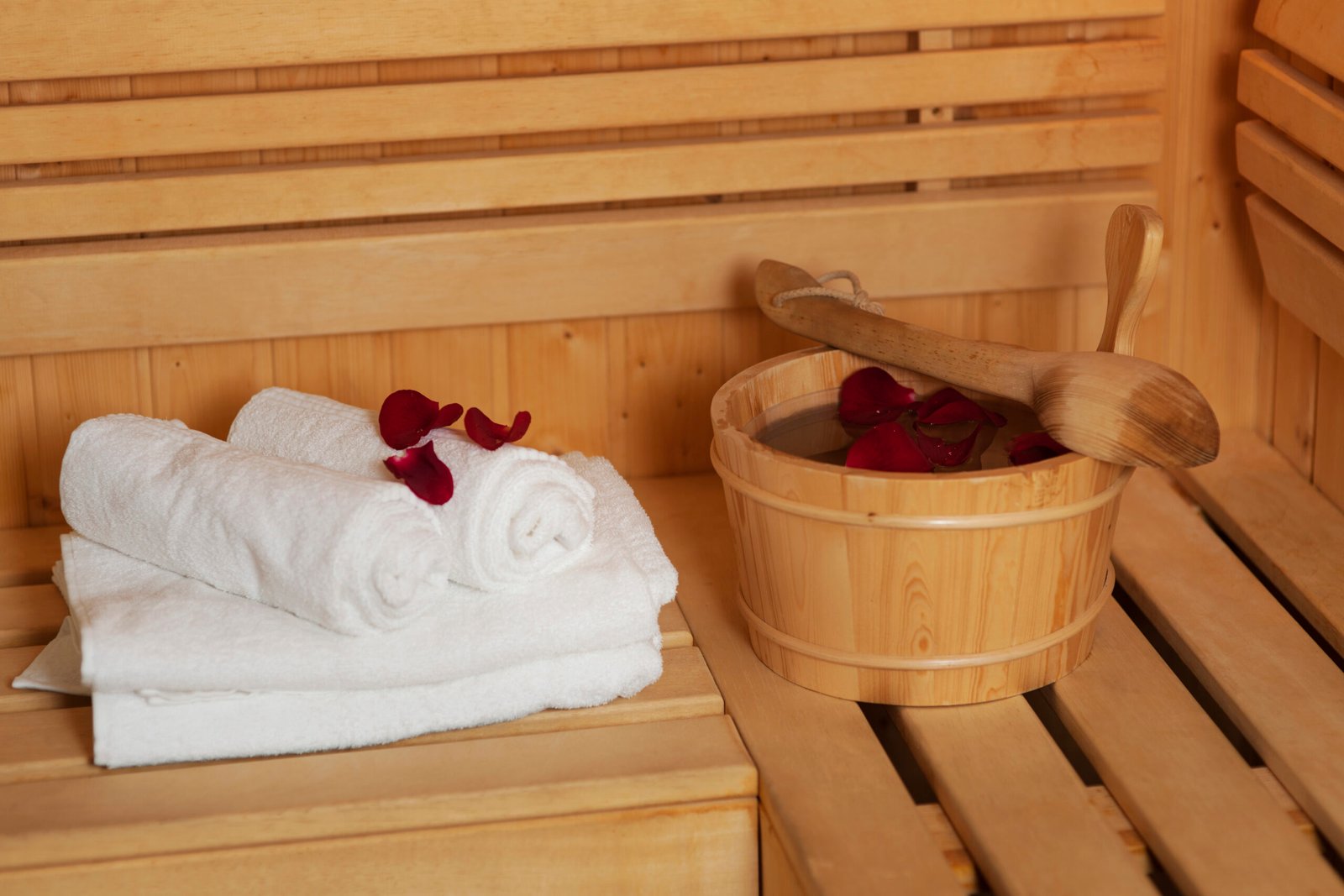
Indoor Traditional Sauna Power Consumption in the UAE:
Introduction: Why Power Consumption Is the First Question Every Buyer Should Ask
For hotel managers, gym owners, and spa operators across the UAE, investing in a wellness facility begins long before the first guest steps inside. Before room layouts, cedar grades, or heater brands, one number defines feasibility: indoor traditional sauna power consumption in the UAE. Get it wrong, and an undersized electrical circuit will trip breakers on opening day. Get it right, and you build a revenue-generating wellness amenity that operates reliably through Dubai summers and RAK resort seasons alike.
This guide is written specifically for B2B decision-makers — hotel directors of engineering, gym fit-out project managers, and spa operators tendering for new builds or refurbishments across Dubai, Abu Dhabi, Sharjah, Ras Al Khaimah, and the wider UAE. We cover heater kW ratings by room size, 3-phase versus single-phase wiring requirements, DEWA and ADDC tariff implications, and a ready-to-use specification checklist for your MEP consultant.
Every figure in this guide assumes a traditional Finnish-style dry sauna using an electric resistance heater — the format most commonly specified in UAE commercial wellness projects due to its reliability, low maintenance requirements, and compatibility with local building regulations.Introduction: Why Power Consumption Is the First Question Every Buyer Should Ask
For hotel managers, gym owners, and spa operators across the UAE, investing in a wellness facility begins long before the first guest steps inside. Before room layouts, cedar grades, or heater brands, one number defines feasibility: indoor traditional sauna power consumption UAE. Get it wrong, and an undersized electrical circuit will trip breakers on opening day. Get it right, and you build a revenue-generating wellness amenity that operates reliably through Dubai summers and RAK resort seasons alike.
This guide is written specifically for B2B decision-makers — hotel directors of engineering, gym fit-out project managers, and spa operators tendering for new builds or refurbishments across Dubai, Abu Dhabi, Sharjah, Ras Al Khaimah, and the wider UAE. We cover heater kW ratings by room size, 3-phase versus single-phase wiring requirements, DEWA and ADDC tariff implications, and a ready-to-use specification checklist for your MEP consultant.
Every figure in this guide assumes a traditional Finnish-style dry sauna using an electric resistance heater — the format most commonly specified in UAE commercial wellness projects due to its reliability, low maintenance requirements, and compatibility with local building regulations.
Section 1: The Fundamentals of Sauna Heater Power Ratings
How kW Ratings Are Calculated
A sauna heater is sized by room volume, not floor area alone. The industry benchmark is 1 kW per 1 m3 of room volume, adjusted upward for rooms with high ceilings, glass panels, non-insulated exterior walls, or continuous commercial use. In the UAE’s ambient temperatures — 35 °C to 48 °C externally in summer — the heater has a meaningful thermal advantage outdoors, but internal A/C temperatures in facilities often mean the sauna shell starts at 22 °C, requiring similar heat-up energy as a European installation.
As a practical B2B rule: always round up to the next heater size bracket. A sauna heater running at 80% capacity lasts significantly longer than one straining at 100%, and heat-up times (a critical metric for commercial operations with back-to-back bookings) are substantially reduced.
Standard Commercial Power Ratings — Quick Reference Table
Room Size (m2) | Recommended Heater (kW) | Electrical Load (A @ 230V) | Circuit Requirement |
Up to 4 m2 | 3.5 – 4.5 kW | 15 – 20 A | Single-phase 32A dedicated |
5 – 8 m2 | 4.5 – 6.0 kW | 20 – 26 A | Single-phase 32A dedicated |
9 – 14 m2 | 7.5 – 9.0 kW | 32 – 39 A | 3-phase 16A / single 63A |
15 – 20 m2 | 9.0 – 12.0 kW | 39 – 52 A | 3-phase 20-25A |
21 – 30 m2 | 12.0 – 18.0 kW | 52 – 78 A | 3-phase 32-40A |
30+ m2 | 18.0 – 24.0+ kW | 78 – 104+ A | 3-phase 50-63A + engineer sign-off |
Single-Phase vs. Three-Phase Supply
This is the most frequently misunderstood aspect of indoor traditional sauna power consumption UAE projects. Below 6 kW, a dedicated single-phase 230V / 32A circuit is generally sufficient and straightforward to install. Above 6 kW — which covers virtually every hotel, resort, and commercial gym installation — three-phase 400V supply is the correct specification. Three-phase wiring distributes load evenly, reduces cable heat, and is preferred by DEWA, ADDC, and SEWA for any commercial load above 5 kW on a single point of use.
Ensure your MEP consultant specifies the heater’s phase requirements at the tender stage. Retrofitting from single to three-phase mid-construction adds high cost and programmed delay.
Section 2: Power Consumption by UAE Venue Type
How Operating Patterns Drive Energy Costs
Calculating actual indoor traditional sauna power consumption UAE for budgeting purposes requires combining the heater’s rated kW with real-world operating hours. A gym sauna running 6 hours per day consumes very differently from a 5-star hotel sauna that must be ready from 6 AM to 11 PM. The table below models typical scenarios across UAE commercial venue categories.
Venue Type | Typical Sauna Size | Heater Range | Daily Run Hours | Est. Daily kWh | Monthly Cost (AED)* |
5-Star Hotel | 15 – 30 m2 | 12 – 24 kW | 10 – 14 hrs | 120 – 336 kWh | AED 360 – 1,008 |
4-Star Hotel | 10 – 20 m2 | 9 – 15 kW | 8 – 12 hrs | 72 – 180 kWh | AED 216 – 540 |
Commercial Gym | 6 – 12 m2 | 6 – 10 kW | 6 – 10 hrs | 36 – 100 kWh | AED 108 – 300 |
Day Spa / Medi-Spa | 8 – 16 m2 | 7.5 – 12 kW | 5 – 8 hrs | 37 – 96 kWh | AED 111 – 288 |
Resort Wellness Club | 20 – 45 m2 | 15 – 30 kW | 12 – 16 hrs | 180 – 480 kWh | AED 540 – 1,440 |
Hotel Saunas — Dubai & Abu Dhabi
Five-star hotels in Dubai and Abu Dhabi represent the most demanding specification category for hotel indoor traditional sauna power consumption UAE. Properties on the JBR, Palm Jumeirah, or Yas Island typically operate wellness facilities for 16-18 hours per day, with multiple sauna cabins in a single facility. Heaters of 15 kW to 24 kW are standard, and three-phase supply is non-negotiable.
Hotel projects should also budget for sub-metering on each sauna circuit. This allows facility managers to monitor consumption per sauna cabin, identify underperforming insulation or door seal issues, and produce accurate cost-per-guest-visit data for P&L reporting. It also simplifies LEED or Estidama documentation for properties targeting green building certification.
Gym Saunas — Commercial Fitness Centres
The gym indoor traditional sauna power consumption UAE profile is typically more moderate than hotel installations, but the commercial intensity can be higher per square metre. Gyms with 1,000+ members often operate a single 6-10 m2 sauna at near-continuous capacity during peak morning and evening hours. Heaters in this range (6-9 kW) can run on a robust single-phase circuit, but operators planning any future capacity expansion should future-proof with a three-phase stub during the initial fit-out.
Ventilation is a critical but often overlooked factor in gym sauna installations. ASHRAE guidelines and UAE municipality requirements mandate positive ventilation exchange rates. An undersized ventilation system increases effective humidity and requires the heater to work harder, artificially inflating your power consumption figures above design intent.
Day Spas & Medical Wellness Centres
Commercial spa operators managing the indoor traditional sauna power consumption in the UAE spa calculation must account for treatment scheduling. Unlike hotels (open access) or gyms (peak/off-peak), spas operate on appointment cycles. A 45-minute sauna session requires the room to be at the target temperature for 15-20 minutes before client arrival, meaning the effective heater-on time often exceeds the client-in-room time by 30-40%.
Smart controllers with pre-set scheduling — allowing the sauna to reach operating temperature at a programmed time before each appointment — are strongly recommended for spa installations. These systems can reduce daily energy consumption by 15-25% compared to operators leaving heaters at set temperature all day.
RAK & Resort Market Considerations
Ras Al Khaimah’s resort wellness market is the fastest-growing sauna specification segment in the UAE. Luxury mountain and beach resorts in RAK often specify larger sauna suites of 20-40 m2, designed for couples, groups, and immersive wellness journeys. This pushes heater requirements to 15-24 kW with three-phase supply as standard, and facilities teams must coordinate with FEWA (Federal Electricity and Water Authority) for supply capacity confirmation before finalising fit-out specifications.
Section 3: UAE Electricity Tariffs and Cost Modelling
Understanding DEWA, ADDC, SEWA & FEWA Commercial Rates
Operating cost modelling for any UAE commercial sauna installation must reference the correct electricity authority for the emirate. Rates vary meaningfully between authorities and between tariff bands:
- Dubai — DEWA (Dubai Electricity and Water Authority): Commercial slab rates currently range from AED 0.23/kWh (Slab 1, up to 10,000 kWh/month) to AED 0.38/kWh (Slab 3, above 30,000 kWh/month)
- Abu Dhabi — ADDC (Abu Dhabi Distribution Company): Commercial rates are structured differently, with most medium commercial users falling in the AED 0.30-0.36/kWh range after fuel surcharge
- Sharjah — SEWA (Sharjah Electricity, Water & Gas Authority): Flat commercial rate structure, typically AED 0.34-0.38/kWh for commercial accounts
- RAK, Fujairah, UAQ — FEWA (Federal Electricity and Water Authority): Rates align broadly with SEWA, typically AED 0.32-0.38/kWh
For a conservative cost model, use AED 0.38/kWh (DEWA Slab 3 / peak commercial) as your planning benchmark. This ensures actual costs do not exceed budget, particularly for properties with high baseline consumption from HVAC, pool heating, and kitchen loads.
A Practical Annual Cost Example — 5-Star Dubai Hotel
Indoor Traditional Sauna Power Consumption in the UAE A 5-star Dubai hotel operating two traditional sauna cabins of 20 kW each for 14 hours per day, 365 days per year:
- Daily consumption: 2 x 20 kW x 14 hrs x 0.75 load factor = 420 kWh/day
- Annual consumption: 420 x 365 = 153,300 kWh/year
- Annual cost at AED 0.38/kWh = AED 58,254/year
- Monthly cost: approximately AED 4,855/month
This figure is before any efficiency gains from smart controls, upgraded insulation, or off-peak pre-heating schedules. Hotels that invest an additional AED 15,000-25,000 in energy management systems typically recover that cost within 18-24 months through reduced consumption alone.
Section 4: Reducing Indoor Traditional Sauna Power Consumption UAE — Practical Measures
Insulation Is the Single Biggest Variable
The most impactful way to reduce indoor traditional sauna power consumption UAE is not choosing a more efficient heater — it is ensuring the room itself retains heat effectively. Commercial saunas with inadequate wall insulation (below R-2.5 in hot climates) or poor door seals can consume 20-30% more energy than an equivalently sized, properly insulated cabin. Specify minimum 100 mm mineral wool insulation in walls and ceiling, and a commercial-grade sauna door with magnetic seal and double-glazed glass panel.Indoor Traditional Sauna Power Consumption in the UAE
Heater and Controller Technology
Modern commercial sauna heaters — from brands such as Harvia, Tylo, EOS, and Helo — include integrated digital controls with scheduling, soft-start functions, and automatic shutdown timers. These features are not luxuries in a commercial UAE context; they are energy management tools. Specify controllers that offer:
- Daily or weekly scheduling with multiple on/off cycles
- Pre-heat timers synced with facility opening hours or booking systems
- Automatic shutdown after a defined period of inactivity (typically 60-90 minutes)
- Remote monitoring via building management system (BMS) integration
Sub-Metering and BMS Integration
UAE facility managers operating multiple wellness amenities should treat sauna sub-metering as standard practice rather than optional. A dedicated sub-meter per sauna cabin provides accurate consumption data, enables comparison against design benchmarks, and simplifies Estidama Pearl, LEED, or WELL building certification submissions. Most BMS platforms (Honeywell, Siemens, Schneider) accept Modbus or BACnet data from modern sauna controllers, enabling seamless integration.
Section 5: Commercial Sauna Power Specification Checklist — UAE
Share this checklist with your MEP consultant, sauna supplier, and fit-out contractor before construction documentation is finalised.
Specification Item | Done |
Heater kW rating confirmed against room volume (m3) | [ ] |
Single-phase or 3-phase supply confirmed with MEP engineer | [ ] |
Dedicated MCB/RCCB circuit installed per IEC 60364 / UAE DEWA/ADDC standards | [ ] |
Cable sizing specified (not shared with other loads) | [ ] |
Earthing and RCD protection verified | [ ] |
Integrated sauna controller with overheat cutout (120 degrees C) | [ ] |
DEWA/ADDC/SEWA NOC or permit obtained if applicable | [ ] |
Sub-meter installed for energy monitoring | [ ] |
Insulation R-value of room confirmed (walls, ceiling, door) | [ ] |
Warranty documentation and CE/ETL/TUV certification on file | [ ] |
Conclusion: Specify Right from the Start
Getting indoor traditional sauna power consumption UAE correct at the specification stage is the single most important technical decision in a commercial sauna project. An undersized circuit creates operational failures and guest complaints. An oversized, poorly insulated room runs up electricity bills that erode the return on your wellness investment. A well-specified installation — correctly sized heater, properly rated 3-phase circuit, quality insulation, and smart controls — will operate reliably for 15-20 years with minimal maintenance intervention.
Whether you are outfitting a luxury spa in Dubai Marina, specifying a gym sauna for a new Abu Dhabi fitness club, or designing the wellness wing of a RAK resort, the principles in this guide apply. Work with an MEP consultant experienced in UAE commercial wellness specifications, reference the correct electricity authority tariffs for your emirate, and demand full certification documentation from your sauna equipment supplier.
For procurement enquiries, project specifications, or technical consultation on indoor traditional sauna power consumption UAE for your hotel, gym, or commercial spa project, engage with a certified sauna supplier who can provide site-specific load calculations and UAE-compliant equipment documentation from day one.
How much power does a commercial sauna consume in UAE?
Covers the kW-per-m³ sizing rule, a worked daily kWh calculation using a 12 kW hotel example, and the factors that push consumption above estimates.
What permits and safety standards apply?
Covers MCB, RCD, 4-pole isolator, over-temperature cutout, earthing, NOC requirements, and equipment certification (CE/ETL/TÜV).Indoor Traditional Sauna Power Consumption in the UAE
How to reduce energy consumption without affecting guests?
Seven actionable measures: insulation upgrade, smart scheduling, shutdown timers, door seal maintenance, sub-metering, off-peak pre-heating, and BMS integration.